How Long Does a Roof Replacement Take?
The work on the roof itself usually takes two to four working days on a typical Ontario house, and longer for a big, steep or tile roof. The full job, from first quote to final inspection, takes longer than that, because the permit, a mid job inspection, the weather and the heat all set the pace.
Skip to the Answer
- The roof maker IKO says a tear off on an average roof takes about a day, and the new roof one or two more.
- Tile takes longer than shingles. Each tile is heavy and set by hand, and a lot of Ontario homes wear concrete tile.
- The City of Ontario lists roof nailing as a common inspection, and work may not go past an inspection point until it is approved, per its permit FAQ.
- Rain is the big winter delay. February at Ontario airport averages 4.5 days with a tenth of an inch of rain or more, per NOAA.
- Heat is the summer delay. At 95 degrees, California requires high heat steps for construction crews, per Cal/OSHA's heat rule.
- You can stay home the whole time. Plan around the noise on tear off day, and keep kids and pets away from the work.
How Long the Work Takes, and What the National Guides Skip
We get asked this at almost every estimate. The owner wants to know how many days of noise, how long the driveway is blocked, and whether they need to book a hotel. Fair questions.
On our roof replacement page we tell people most homes take two to four working days. Big roofs, steep roofs and tile jobs can take longer, and we put the expected days in the written quote.
The roof maker IKO, in a guide dated May 28, 2025, says a tear off takes about a day on an average size roof and the new roof takes one or two more. That is a fair national number for a simple shingle job. But the guide never mentions a permit or an inspection. It does not talk about heat at all. And it says almost nothing about tile.
Those three things are exactly what stretch a reroof in Ontario. So this page walks through the whole job the way it really runs here, from the day you sign to the day the inspector signs off.
The Whole Job, Start to Finish
Signing the contract. California's sample home improvement contract from the Contractors State License Board has a line for an approximate start date and an approximate completion date. It also has a line that says what counts as substantial start of work. If your contract leaves those blank, ask for them before you sign. The same sample lists a three day right to cancel for most owners, and five days if the owner is over 65.
The permit. A full reroof needs a building permit in Ontario. The city works with an online system called Symbium for detached single family reroof permits, and calls those permits streamlined on its reroof permit page. Your roofer usually pulls it. One more date to know. Per the city's permit FAQ, a permit expires if no work starts within six months of the day it was issued.
Materials. Shingles, underlayment and flashing are delivered before day one. Tile is heavy, so it is often loaded onto the roof in stacks before or during the job.
Tear off. The old roof comes off down to the wood deck. This is the loud, dusty day. Any soft or rotten wood shows up now, and it gets replaced before anything new goes on.
The mid job inspection. The city's FAQ lists roof nailing among the common inspections and says work may not continue past each inspection point until the inspector approves it. In practice that means a day where the new deck or nailing has to be seen before the roof gets covered. Your roofer schedules it. If the inspector comes the next morning, the crew plans around that.
Dry in and new roof. New underlayment goes down, then flashing at walls, pipes and the edges, then the shingles or tile. This is the stretch that varies most by roof size and material.
Cleanup and final. The crew cleans up and sweeps the yard for nails. The city does a final inspection on the finished work. Keep the permit card and the final sign off with your house papers. You will want them when you sell.
| Step | What sets the timing | Source |
|---|---|---|
| Contract | Approximate start and completion dates written in. Three day right to cancel for most owners, five if over 65 | CSLB sample home improvement contract |
| Down payment | No more than $1,000 or 10% of the price, whichever is less | CSLB sample home improvement contract |
| Permit | Reroof permit for a detached single family home through the city's online portal | City of Ontario reroof permit page |
| Permit clock | Expires if no work starts within six months of issue | City of Ontario permit FAQ |
| Roof nailing inspection | Work may not go past an inspection point until approved | City of Ontario permit FAQ |
| Rain | About 4.5 rain days in February, almost none June to August | NOAA 1991 to 2020 normals, Ontario airport |
| Heat | Shade over 80 degrees, high heat procedures at 95 degrees | Cal/OSHA Title 8, Section 3395 |
Shingle vs. Tile, and Why Ontario Roofs Run Longer
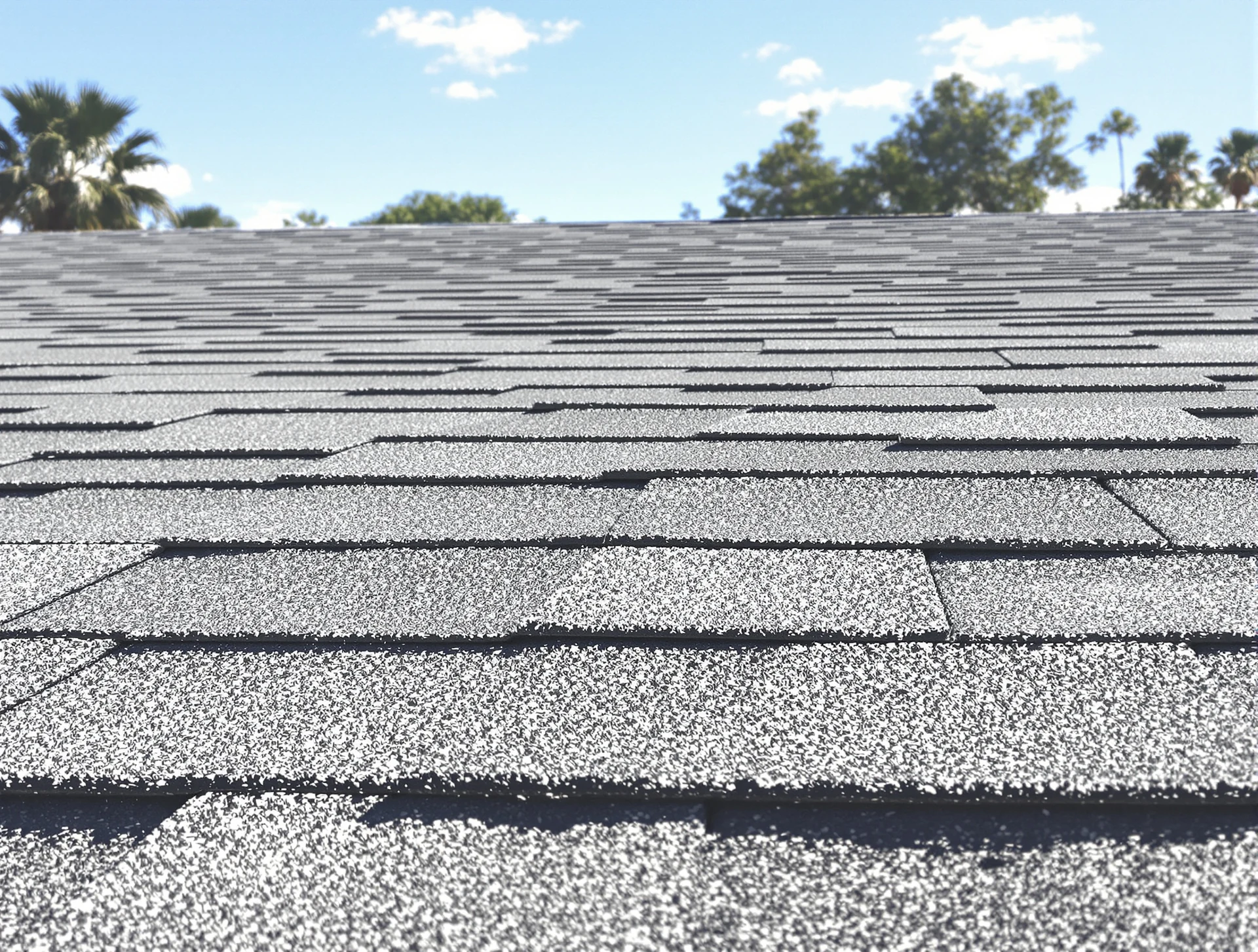
A plain shingle roof on a one story ranch house is the fast case. It is light, it is quick to nail, and the crew can tear off and dry in one section at a time. That is where the national one to two day numbers come from.
Tile is a different job. Concrete and clay tile are heavy, each piece is set by hand, and every hip and ridge needs its own trim pieces. On a lot of tile roofs the owner also has a choice. Pull and reuse the good tile over new underlayment, or go to new tile. Either way it is more handling than shingles. Our tile roofing page explains that choice.
Size and shape matter as much as material. A two story house with lots of hips, valleys and a few skylights takes longer than a simple gable roof of the same size. So does a roof where the crew has to carry everything up a tall ladder because no room is left for a truck.
The energy code matters too. When more than half of a home's roof is replaced, California's cool roof rules can apply, per the California Energy Commission. Rated roofing products carry a Cool Roof Rating Council label. This does not slow the work much, but it does mean the product has to be picked before the permit, not on day two.
The rule is simple. Ask your roofer to write the expected number of working days into the quote, and to say what would add days. Rotten wood, an inspection that has to be rescheduled and weather are the usual three.
Rain, Santa Anas and Summer Heat
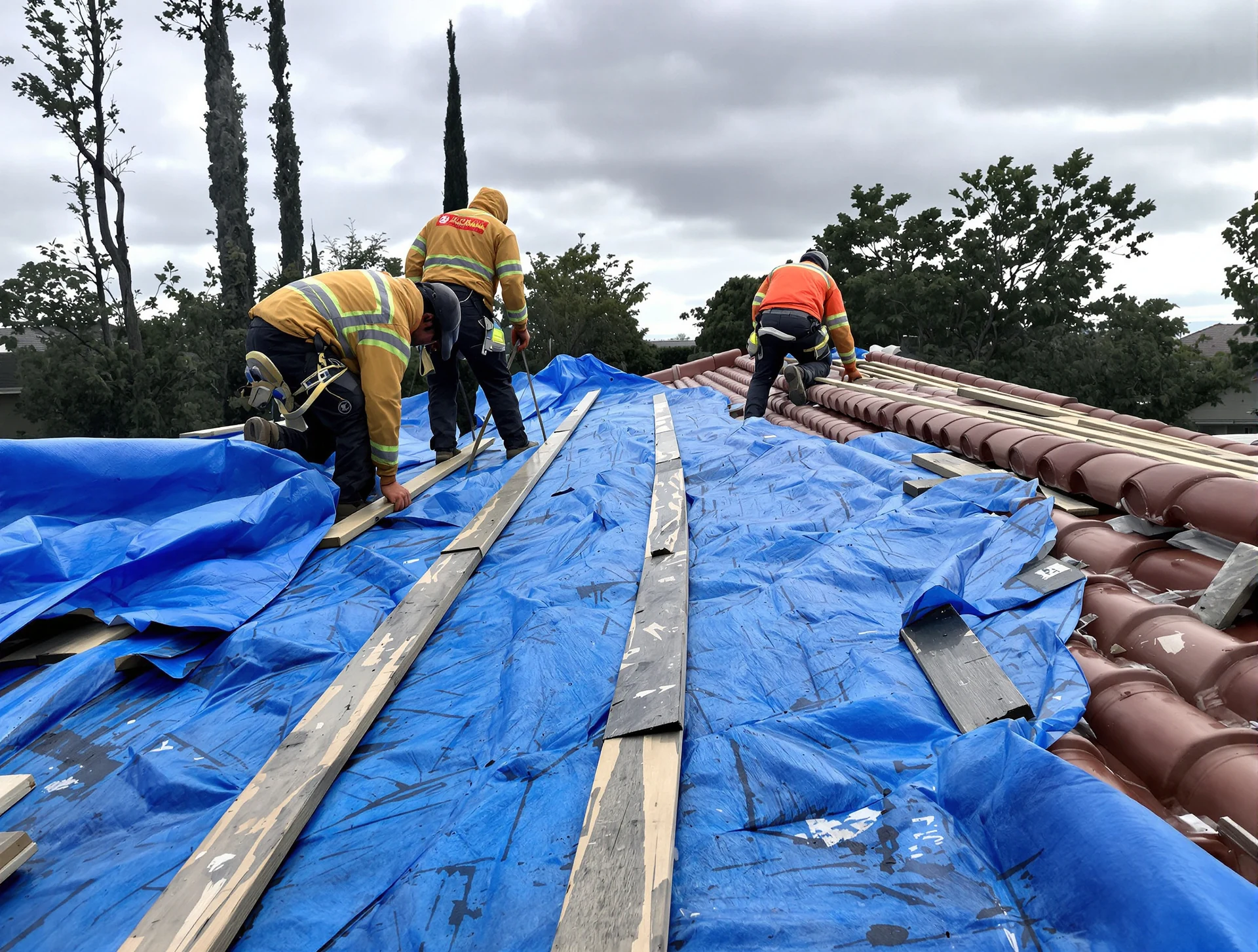
Nobody tears off a roof with rain coming. Once the old roof is off, the house is open until the new underlayment is down. So a forecast of rain pushes the start, and a surprise storm mid job means a tarp and a wait.
The good news is that real rain days are rare here. NOAA's 1991 to 2020 normals for Ontario International Airport show about 4.5 days with a tenth of an inch of rain or more in February, 3.4 in January and December, and almost none from June through August. Month by month, the average is 0.9 days in October, 1.8 in November, 3.4 in December and January, 4.5 in February, 2.7 in March and 1.8 in April. July averages just 0.1. A winter job may slide a few days. A summer job almost never waits on rain.
Wind is the other winter problem. Santa Ana days make it unsafe to carry sheets of underlayment and bundles across a roof, and a good crew will stop rather than lose a roll off the edge.
Summer has its own limit. The same NOAA normals show about 22.7 days at 90 degrees or hotter in an average July, and 23.8 in August. Under California's heat illness rule, shade has to be up when it is over 80 degrees, and construction is on the list of industries that must follow high heat procedures at 95 degrees. That means closer watching of the crew for heat illness and reminders to drink water. Many crews start at first light in July and August and wrap up by early afternoon, so a summer job can take an extra day on the calendar even when nothing goes wrong.
Rain Days by Month at Ontario Airport
Can You Stay Home While the Roof Is Replaced?
Yes. Almost everyone stays home, and you do not need to move out. IKO says the same, but it suggests finding somewhere else for kids and pets on tear off day because of the noise and falling debris. We agree.
Living through it means noise, dust and a blocked driveway. Tear off day is loud from the first hour. Hammers and nail guns shake the ceiling, and pictures can walk off the wall. Dust and old granules can drift down into the attic, and sometimes through a loose attic hatch. The driveway is often blocked by a bin or a material truck.
Pets have the hardest time. A dog that barks at the mail carrier will not enjoy three days of people walking overhead. A day at a friend's house or a kennel on tear off day saves everyone a lot of stress.
If you work from home, plan your calls for the afternoon of the last day, or work from somewhere else on tear off day. The second half of the job is quieter, but not quiet.
Get Ready the Night Before Tear Off
- Move cars out of the driveway and garage so the bin and trucks can get in.
- Take pictures and mirrors off the walls on the top floor.
- Cover things stored in the attic with old sheets, or move them out.
- Move patio furniture, grills and potted plants away from the walls.
- Plan where the kids and pets will be on tear off day.
- Show the crew where the outdoor outlet and hose bib are.
- Ask your roofer what day the city inspection is set for.
People Also Wonder
How long does it take to replace a roof on a 2,000 square foot house?
Our roof replacement page puts most homes at two to four working days on the roof, and a simple shingle roof sits at the short end. A tile roof of the same size takes longer. The permit, the city inspection and the weather can add days to the calendar. Ask your roofer to write the expected working days into the quote.
Can you stay in your house while the roof is being replaced?
Yes. Most owners stay home. Expect loud noise on tear off day, some dust in the attic and a blocked driveway. Kids and pets are usually happier somewhere else on that first day.
How long does it take to remove and install a new roof?
The tear off is usually about a day on an average roof, and the new roof one or two more, per IKO. Tile roofs, steep roofs and big two story homes take longer.
Do roofers work in the rain?
Not on a tear off. Once the old roof is off, the house is open until the new underlayment is down, so a good roofer waits for a dry forecast. In Ontario that matters mostly from November to March.
Why is my roof replacement taking so long?
The usual reasons are rotten wood found under the old roof, waiting on the city inspection, rain or wind days and short summer workdays in the heat. Your contract should list an approximate start and completion date, per the CSLB. If the job is far past it, ask your roofer for the reason in writing.
Does a roof replacement need a permit in Ontario, CA?
Yes, a full reroof needs a building permit. The city handles detached single family reroof permits through an online portal, per its reroof permit page. Your roofer normally pulls it and books the inspections.
Further Proof
- IKO: What to Expect During Roof Replacement, Timeline and Tips (May 28, 2025)
- Contractors State License Board: Sample Home Improvement Contract (2025)
- City of Ontario: Apply for Residential Reroof and Solar Permits
- City of Ontario: Building Permit FAQs
- NOAA NCEI: 1991 to 2020 monthly climate normals, Ontario International Airport
- Cal/OSHA: Title 8, Section 3395, Heat Illness Prevention in Outdoor Places of Employment
- California Energy Commission: Energy Efficient Cool Roofs, Single Family
Want more roof advice from us when you search Google?
Like this? Add Ontario Roofing to your Google sourcesNext Moves
We do this work in Ontario, Rancho Cucamonga, Upland, Chino, Chino Hills, Fontana, Montclair, Eastvale, Pomona, Claremont. See every service.
Where to Find Ontario Roofing
4335 E Lowell St Ste G, Ontario, CA 91761
Get a Free Roof Estimate
Tell us what your roof is doing. We look, take photos and give you a written price.