Don't Start a Reroof in Ontario, CA Without a Permit
Yes. A full roof replacement in Ontario needs a building permit, and that holds whether a roofer does the work or you do it yourself.12 It matters because the permit decides who is on the hook for the inspections, the code and anyone who gets hurt on your roof. Rules updated October 2026.
Skip to the Answer
- The City of Ontario takes reroof permits for detached single family homes through an online portal, and both homeowners and contractors can apply.1
- You can pull the permit and do the work yourself on a home you live in or will live in.2
- Pay a friend or a handyman to help and you may become an employer, with workers' comp and payroll tax duties.5
- An unlicensed person can't legally do permitted work, even a job under $1,000.7
- A full replacement means tearing off down to the roof deck, and every Ontario ZIP code falls under the state's cool roof rules for reroofs.8910
The Permit Is Not Optional in Ontario
The City of Ontario runs reroof permits for detached single family homes through an automated platform built with a company called Symbium. The city calls these permits streamlined, and its page says both contractors and homeowners can use the portal to pull one.1
A streamlined permit is still a permit. It still comes with fees and inspections. Per the city's permit FAQ, fees are based on the value of the project, and a plan review fee equal to 80 percent of the permit fee is collected when you apply.2
The clock matters too. A permit expires if no work starts within six months of the day it was issued, or if work stops for more than six months.2 A roof torn off in spring and left half done over the summer can lose its permit.
Ontario is not every city. Rancho Cucamonga, Upland, Chino and Fontana each run their own building departments, so check the city named on your property tax bill. If you are not sure the address is inside Ontario city limits, the city asks you to confirm that before you start an application, and its main line is (909) 395-2000.1
Can You Replace Your Own Roof in California?
Yes, it's legal. California calls this being an owner-builder. The city's FAQ says a homeowner can get a permit and do construction, alteration or repair work on the house if the owner lives there or will live there.2
State law sets the edges. Under Business and Professions Code section 7044, an owner can skip a contractor license when nothing is built for sale and the owner either does all the work alone or uses employees who are paid only wages.3 There is a separate route for your main home. It covers work done before a sale, when you lived in the home for the 12 months before the work was finished, and you have not used it on more than two homes more than once in any three year period.34
Selling soon changes the math. If you sell or list the home within one year of finishing, the law presumes you did the work to sell it. You can push back on that, but now the burden is on you.3
Signing the permit as an owner-builder also signs you up for the whole job. The Contractors State License Board says you take full responsibility for every phase of the project, you must pull all the permits, and the work must pass every inspection.5
The Owner-Builder Rules in Four Numbers
Who You Hire Changes Everything
This is where DIY roofs go wrong. A reroof is heavy, hot work, so few homeowners do it alone. The moment you bring in help, the law looks at who that help is.
The CSLB says using anyone other than a licensed subcontractor may make you an employer. Employers must register with the state and federal governments and handle income tax withholding, Social Security taxes, workers' compensation insurance, disability insurance and unemployment contributions.5
Skip those and the risk lands on you. The CSLB warns that if an unlicensed worker without insurance gets hurt, you could be asked to pay for the injury and rehab through your homeowner's policy, or face a lawsuit. It also warns that unpaid suppliers or subs can put a lien on your home.^6] Our post on [who pays if a roofer falls off your roof walks through how that plays out in California.
The cheap handyman route is closed too. Since January 1, 2025, California lets an unlicensed person take jobs up to $1,000 with no license, but only if the work needs no permit and the person hires no one to help.7 A reroof needs a permit, so an unlicensed person can't legally do it at any price.7
Before anyone touches your roof, look them up on the CSLB license search. You can search by license number, business name or the name of a person on the license.11
| Who Does the Work | Is It Legal? | What It Puts on You |
|---|---|---|
| You, alone, on a home you live in | Yes, with a permit23 | Every inspection and every code rule5 |
| You plus helpers you pay | Yes, with a permit3 | Employer duties like workers' comp and payroll taxes5 |
| You plus licensed subcontractors | Yes, with a permit4 | Scheduling, paying and supervising them5 |
| An unlicensed handyman, any price | No, permitted work needs a license7 | Injury and lien risk if things go wrong6 |
| A licensed roofing contractor | Yes1 | Checking the license before you sign11 |
What the Code Asks For on a Reroof
A permit means an inspector checks the work against the California Residential Code. A few rules catch DIY roofers off guard.
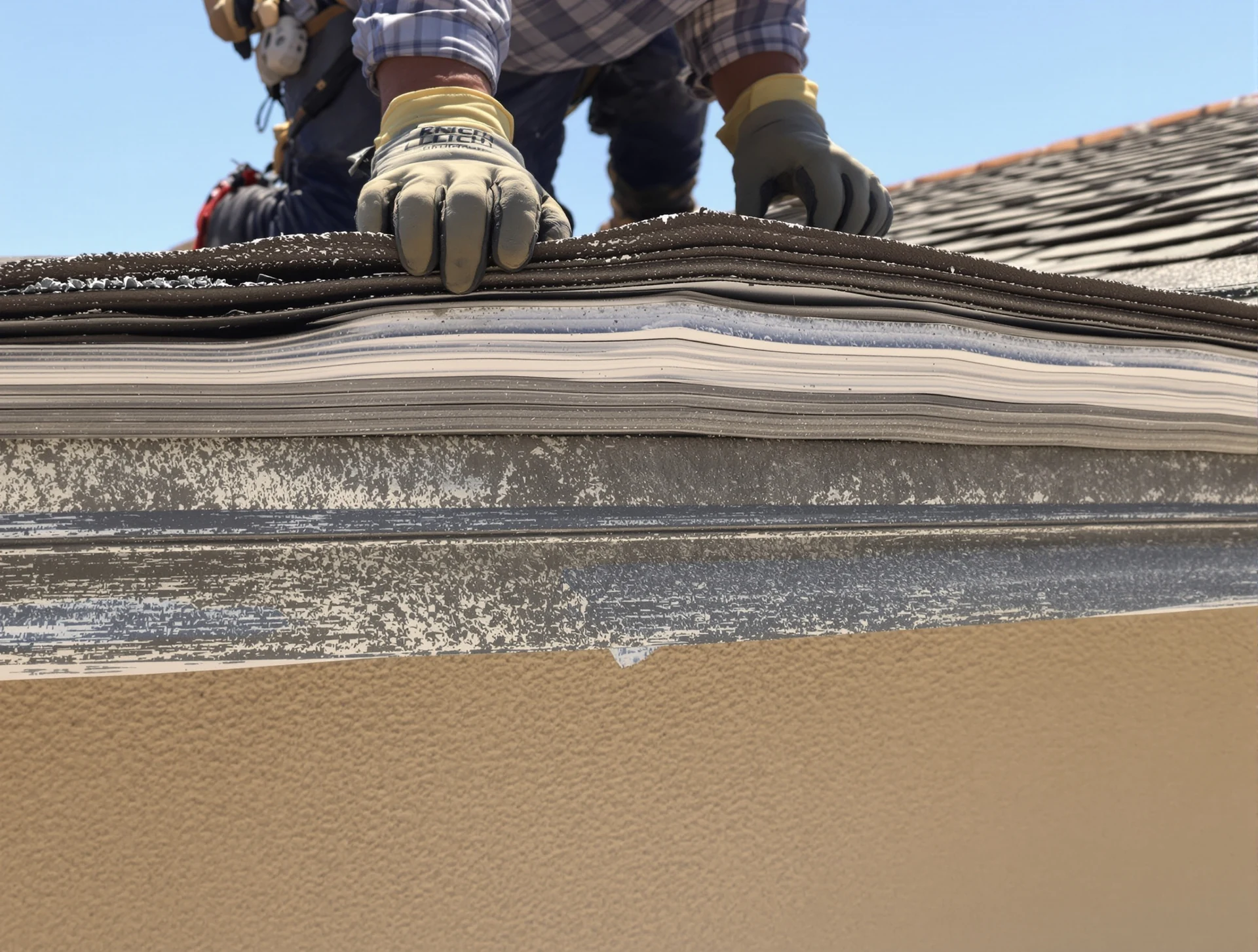
Tear off means all the way down. A roof replacement includes removing the existing layers down to the roof deck.^8] Laying new shingles over old ones is a recover, and it's not allowed when the roof already has two or more layers, or when the old roof is water soaked or worn out.8 Our post on [roofing over old shingles covers when a recover is even an option.
Broken tile stays off. Cracked, damaged or broken tile can't be put back on the roof.^8] On a 25 year old concrete tile roof, that can mean buying matching tile before the job starts. Our [tile roofing page covers what usually gets replaced under the tile.
Flashing gets rebuilt. The code says flashings must be rebuilt to the maker's installation instructions.8 Reusing bent old metal around a chimney or a wall is how a new roof leaks in its first storm.
Fire rating. Outside high fire hazard zones, the code calls for at least a Class C roof covering. Inside those zones it calls for at least Class A when more than half the roof is replaced within a year.8
Cool roof rules. All three Ontario ZIP codes, 91761, 91762 and 91764, are in state climate zone 10.10 The Energy Commission says its cool roof rules kick in when more than 50 percent of the roof is replaced, and the reroof rule covers steep roofs in zones 4 and 8 through 15. For a steep roof in zone 10, the sheet lists an aged solar reflectance of at least 0.20 and a thermal emittance of at least 0.75, or a solar reflectance index of at least 16, using values from a CRRC label.9 A few homes are exempt, for example ones with R-38 ceiling insulation, a radiant barrier, or no ducts in the attic.9
The Inspections You Will Book
On an owner-builder permit, you are the one who calls the inspector. The city's FAQ says the owner must tell the inspector when work is ready, work is inspected in order, and you can't move past an inspection point until it is approved.2
Roof nailing is one of the common inspections the city lists, and there is a final inspection when the job is done.2 Plan your tear off so the deck is open and dry when the inspector arrives. A roof covered back up before it passes can mean pulling material off again.
Weather is the other half of the plan. A bare deck left open with rain in the forecast is a gamble. A licensed crew usually tears off and dries in one section at a time. If you are going it alone, work the same way, watch the forecast and keep a tarp on hand.
Before You Tear Off a Single Shingle
- Confirm the address is inside Ontario city limits, not a neighbor city
- Pull the reroof permit through the city's online portal
- Count your roof layers and look for soft or water soaked deck
- Pick a roof product with a CRRC label that meets the zone 10 cool roof values
- Decide who helps, and if you pay them, set up workers' comp first
- Look up any contractor or sub on the CSLB license search
- Book the roof nailing inspection before you cover the deck
- Keep the final inspection sign off with your home records
When DIY Makes Sense, and When It Doesn't
DIY can make sense on a small, low, single story shingle roof, when you have done roofing before, you have real fall protection, and you plan to stay in the home for years.
DIY rarely makes sense on concrete tile, on a two story home, when you need paid helpers, or when you might sell within a year. Each of those adds a legal duty or a safety risk that a licensed crew already carries.
Whichever way you go, get the permit, keep a copy of every inspection sign off, and take photos of the bare deck before it gets covered. That paper trail helps when you sell the home or file a claim later. A free roof inspection is a good way to find out what is under your roof before you decide.
If you'd rather hand the permit and the inspections to someone else, call Ontario Roofing at (909) 404-9464 for a free written estimate on your roof replacement.
People Also Wonder
Is it illegal to replace your own roof?
No. In Ontario a homeowner can get a permit and do the work on a home they live in or will live in.2 What's illegal is skipping the permit, or paying an unlicensed person to do permitted work.7
What do I need to pull a roofing permit?
In Ontario, start on the city's reroof permit page and confirm the address is inside city limits, then apply through the online portal.1 Expect a fee based on the project's value, plus a plan review fee equal to 80 percent of the permit fee.2
What can a homeowner do without a permit in California?
It depends on the city, and a full reroof is not on that list in Ontario.1 For a small patch, call the city at (909) 395-2000 and ask before you start.1
What happens if an inspector finds unpermitted work?
Ontario inspects work in order, and you can't move past an inspection point until it is approved.2 Roof nailing gets covered up fast, so work done without a permit can mean opening it back up for the inspector to see.
Is it hard to replace a roof by yourself?
It is hard, hot and high. Code wants a full tear off to the deck, rebuilt flashing and no broken tile reused.8 Add helpers and you take on employer duties.5 A small single story shingle roof is the most DIY friendly case.
Can a handyman replace my roof?
Not legally unless the handyman holds a contractor license. California's $1,000 minor work exemption does not cover any job that needs a permit.7
Further Proof
- City of Ontario: Apply for Residential Reroof and Solar Permits
- City of Ontario: Building Permit FAQs
- FindLaw: California Business and Professions Code Section 7044
- Contractors State License Board: Owner-Builder Overview for Building Officials
- Contractors State License Board: Owner-Builder Responsibilities
- Contractors State License Board: Owner-Builder Risks
- Contractors State License Board: License Requirement for Minor Work Increases From $500 to $1,000 (December 31, 2024)
- California Residential Code 2022, Chapter 9, Sections R902.1 and R908 Reroofing (UpCodes)
- California Energy Commission: Energy Efficient Cool Roofs, Single-Family Residential, 2022 Standards
- California Energy Commission: Building Climate Zones by ZIP Code
- Contractors State License Board: Check a License
Want more roof advice from us when you search Google?
Like this? Add Ontario Roofing to your Google sourcesNext Moves
We do this work in Ontario, Rancho Cucamonga, Upland, Chino, Chino Hills, Fontana, Montclair, Eastvale, Pomona, Claremont. See every service.
Where to Find Ontario Roofing
4335 E Lowell St Ste G, Ontario, CA 91761
Get a Free Roof Estimate
Tell us what your roof is doing. We look, take photos and give you a written price.