The Roof Inspection Checklist for Ontario, CA Homes
A roof fails inspection when it shows signs of an active leak, loose or broken tile, flashing that can't keep water out, more layers than code allows, or an attic that can't breathe.13 Which of those gets caught depends on who is looking, because a home sale inspector, a city inspector and an insurer each check different things. Code facts updated October 2026.
Skip to the Answer
- A California home inspection is noninvasive by law. It looks for defects that affect value, safety or habitability.2
- Under the InterNACHI standard, a home inspector can check the roof from the ground or the eaves and is not required to walk it.1
- State code wants a fastener in every tile along the roof edges, flashing at every wall, and a cricket behind any chimney over 30 inches wide.3
- A roof can carry two layers at most, and tile can't be covered over at all.3
- Attic vents need at least 1/150 of the attic floor area in most cases.4
Three Inspections, Three Different Bars
The word inspection usually comes up when a house is bought or sold. In Ontario, a roof can be judged three ways, and they don't use the same yardstick.
The home sale inspection. California law calls a home inspection a noninvasive physical exam done for a fee when a home changes hands.2 Its job is to find material defects. The law defines that as a condition that seriously affects the value, desirability, habitability or safety of the home. Looks and style don't count.2
The city inspection. When a roof is replaced with a permit, the City of Ontario inspects it. The city's permit FAQ lists roof nailing among its common inspections, and says work can't go past each inspection point until the inspector approves it. A final inspection signs off the whole job.7
The insurance look. An insurer cares about two things. Is the roof in good repair, and what is it made of? The state's Safer from Wildfires program counts a Class A roof as one of its discount steps, and says asphalt shingles and concrete or clay tile usually qualify. Wood shakes don't.^6] Our post on [roof age and California insurance covers the age side of that.
So a roof can pass one and fail another. A tile roof can look fine to a buyer's inspector from the driveway and still have paper underneath that is done.
| Inspection | Who Does It | What It Looks At | What Fails It |
|---|---|---|---|
| Home sale | A home inspector hired by the buyer | Covering, gutters, flashing, vents and structure, from the ground or eaves | Signs of an active leak or a material defect |
| City permit | A City of Ontario building inspector | Roof nailing before cover, then the finished job | Work that doesn't meet code at each inspection point |
| Insurance | Your insurer | Condition and roof class | Poor repair, or a covering that isn't Class A for a wildfire discount |
The Eight Things That Fail a Roof
These are the findings that turn a clean report into a repair request. Each one ties back to a written standard, so you can check it yourself.
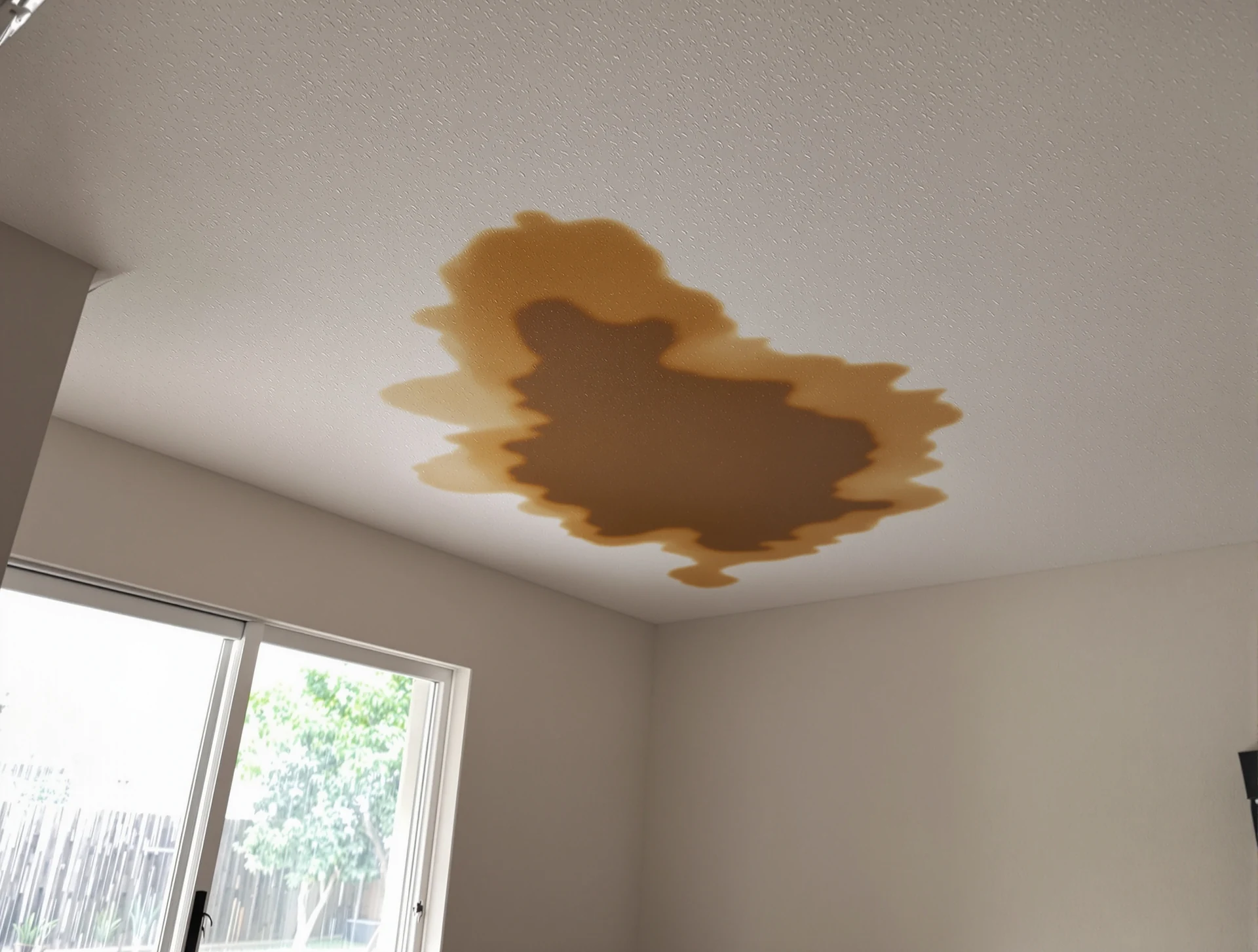
1. Signs of an active leak. The InterNACHI standard tells a home inspector to report any observed sign of an active roof leak as needing correction.1 That means fresh ceiling stains, wet wood in the attic or daylight through the deck.
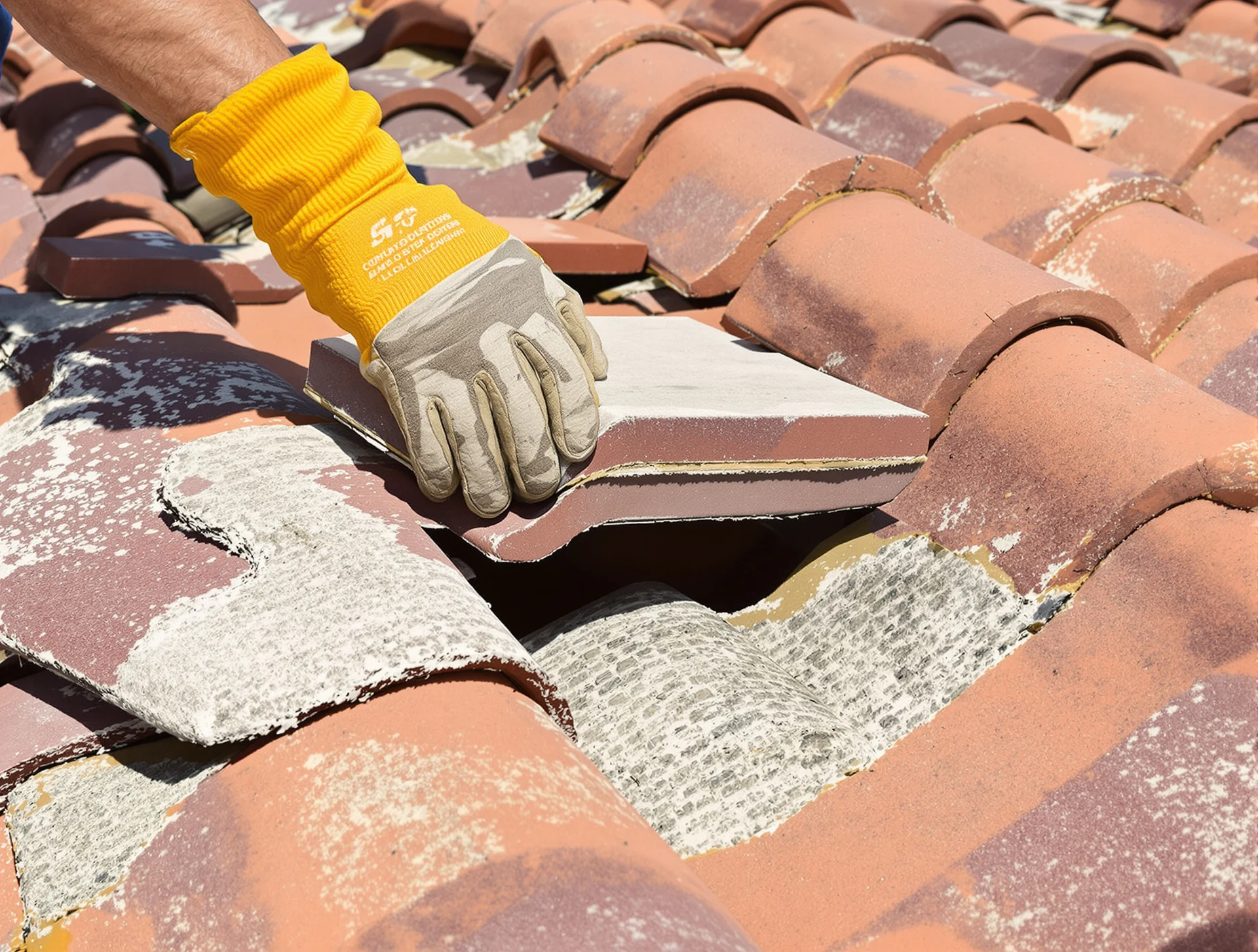
2. Loose, slipped or broken tile. State code wants at least one fastener in each tile along the roof edges, and the edge zone runs three courses deep. Tile lighter than 9 pounds per square foot needs a fastener in every tile no matter the slope.3 A tile that has slid out of line on the eave is often a fastening problem, not just a cosmetic one. Santa Ana wind finds those first.
3. Tired underlayment under tile. The Tile Roofing Institute's technical director has written that dense modern tile is the main water shedding layer, and the sealed underlayment is the backup for wind driven rain or broken tile.5 When that backup wears out, a cracked tile turns into a ceiling stain. Nobody can see it from the ground.
4. Flashing at walls and chimneys. Code requires flashing wherever a roof meets a wall, plus a diverter where a sloped eave meets a sidewall. Metal flashing has to be at least 0.019 inch thick, which is 26 gauge galvanized.3 Any chimney or roof opening wider than 30 inches needs a cricket on its uphill side to split the water.3
5. Valleys on tile roofs. Tile valley metal must reach at least 11 inches out from the center line on each side, with a rib at least 1 inch tall and laps of at least 4 inches.3 Short or rusted valley metal is a common leak point after the first big storm.
6. Too many layers. A new roof can't go over a roof that already has two layers of any kind. It also can't go over clay or cement tile.^3] A buyer's inspector who spots a thick double edge will flag it, because the next roof is a full tear off. Our guide to [roofing over old shingles shows how to count them.
7. An attic that can't breathe. The code sets the net free vent area at 1/150 of the vented attic space, or 1/300 when certain conditions are met.4 Vent openings need screens with holes between 1/16 and 1/4 inch.4 In an Ontario summer, a starved attic bakes the underside of the roof.
8. Gutters, drains and flat spots. InterNACHI inspectors check gutters and downspouts.1 On a low slope roof that doesn't drain over its edges, code wants a drain at each low point.3 Ponding water on a flat roof or patio cover is a fail waiting to happen.
Your Own Check From the Ground and the Attic
- From the street, look along each eave for tile that has slid out of line or is missing.
- Look for cracked tile or bare spots near valleys and where the roof meets a wall.
- Check the roof edge for a thick double edge that means two layers.
- Look at the chimney. If it is wider than 30 inches, there should be a cricket behind it.
- In the attic, use a flashlight on the underside of the deck for dark stains or wet wood.
- Find the vents and make sure screens are in place and not blocked by insulation.
- After a rain, check that every downspout runs and nothing ponds on a flat section.
- Stay off the roof. Walking on tile cracks it, and a fall is not worth the look.
What a Home Inspector Won't Tell You
The home inspection is a great first look. It is not a roof report.
Under the InterNACHI standard, the inspector is not required to walk on the roof, or to walk any part that looks unsafe or could be damaged by walking.1 They don't have to run a water test. They don't have to confirm that the roofing was fastened or installed right. They don't have to predict how many years the roof has left, and they don't certify it.1
That makes sense. Walking a concrete tile roof the wrong way cracks tile, and the inspector has the whole house to cover.
But it leaves a gap on the exact roofs we see most in Ontario. Many tract homes from the 1980s to the 2000s carry concrete tile, and on those roofs the parts that fail are the underlayment, the edge fastening and the valley metal. All three hide under the tile.5
If the report says the roof is at or near the end of its life, or the inspector noted they couldn't walk it, ask a roofer for a separate roof inspection before you close. Ask for photos of the valleys, the edges, the attic and a lifted tile or two.
Roof Code by the Numbers
If Your Roof Fails, Do This Next
A failed item is a to do list, not a verdict. Many findings are plain repairs.
Read each line on its own. A slipped edge tile, a bent piece of flashing and a clogged downspout are separate jobs. Ask whether each one is a roof repair or part of a bigger problem. Worn underlayment across the whole roof is the one finding that usually points to a re-lay or a roof replacement.
Keep the tile that is sound. California code lets existing clay or cement tile go back on, but cracked or broken pieces can't be reused.3 On a re-lay job, ask how many replacement tiles the bid includes.
Get the permit and keep the sign off. If the fix becomes a reroof, the city inspects the roof nailing before the roof gets covered, then does a final.7 Keep that final with your house papers. The next buyer's inspector will ask.
Check the license before anyone climbs up. The Contractors State License Board lets you look up any contractor's license for free.9
Be careful with the door knock. The Federal Trade Commission warns that scammers knock on doors saying they are in the area, claim leftover materials from another job, and push for a decision on the spot.8 A real failed item will still be there tomorrow.
If you want a second set of eyes on an inspection report, call Ontario Roofing at (909) 404-9464 for a free written estimate.
People Also Wonder
What will fail a roof inspection?
Signs of an active leak, loose or broken tile, flashing that doesn't meet code, more than two layers, poor attic ventilation and bad drainage are the usual fails.134 A home inspector reports leak signs as needing correction.1
Does a home inspector walk on the roof?
Not always. The InterNACHI standard lets the inspector check the roof from the ground or the eaves, and they are not required to walk it.1 On concrete tile, many won't, because walking can crack tile.
What do inspectors look for on a tile roof?
Slipped or broken tile, the fasteners along the edges, valley metal, flashing at walls and chimneys, and signs of leaks in the attic.3 The underlayment under the tile is the real waterproof backup, and it can't be seen from the ground.5
Does a reroof in Ontario need a city inspection?
Yes. The City of Ontario lists roof nailing among its common inspections, and the work can't move past that point until the inspector approves it. A final inspection closes the permit.7
Why do I keep getting calls about free roof inspections?
Some are real roofers looking for work. The FTC warns that scammers often say they are in the area, claim leftover materials, and push for a fast decision.8 Check any contractor's license with the CSLB first.9
Can a cracked roof tile be reused?
No. California code lets sound clay or cement tile go back on a roof, but cracked, broken or damaged tile can't be reinstalled.3
Further Proof
- InterNACHI: International Standards of Practice for Performing a General Home Inspection, Section 3.1 Roof
- California Business and Professions Code Section 7195, home inspection and material defect definitions (FindLaw)
- California Residential Code 2022, Chapter 9, Sections R903, R905.3 and R908 (UpCodes)
- California Residential Code 2022, Chapter 8, Section R806 Roof Ventilation (UpCodes)
- Eagle Roofing: Ask a TRI Alliance Expert, Roof Protection, Tiles and Underlayment, April 6, 2017
- California Department of Insurance: Safer from Wildfires
- City of Ontario: Building Permit FAQs
- Federal Trade Commission: How To Avoid a Home Improvement Scam, July 2022
- Contractors State License Board: Check a License
Want more roof advice from us when you search Google?
Like this? Add Ontario Roofing to your Google sourcesNext Moves
We do this work in Ontario, Rancho Cucamonga, Upland, Chino, Chino Hills, Fontana, Montclair, Eastvale, Pomona, Claremont. See every service.
Where to Find Ontario Roofing
4335 E Lowell St Ste G, Ontario, CA 91761
Get a Free Roof Estimate
Tell us what your roof is doing. We look, take photos and give you a written price.